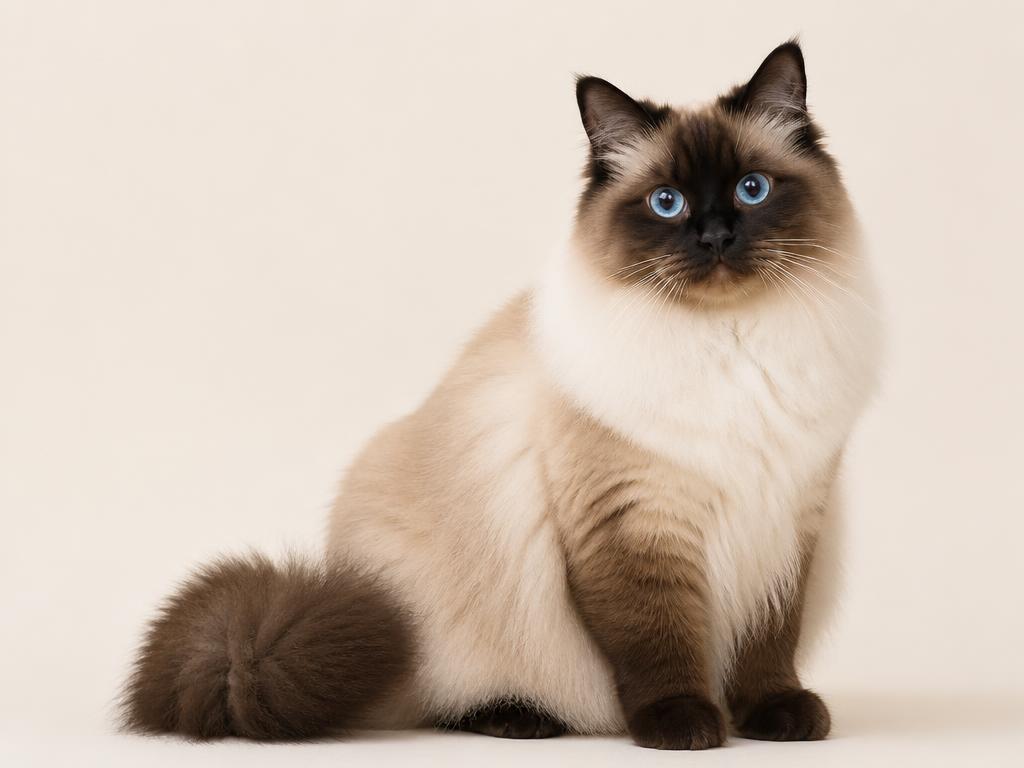
Seal Point
Dark brown points on a warm ivory body. The classic Ragdoll color with deep seal-toned ears, face, paws and tail.
Real-world reference photos of common Ragdoll colors and patterns. Use these examples to compare against your own cats or to understand what the calculator results mean.
Dark brown points on a warm ivory body. The classic Ragdoll color with deep seal-toned ears, face, paws and tail.
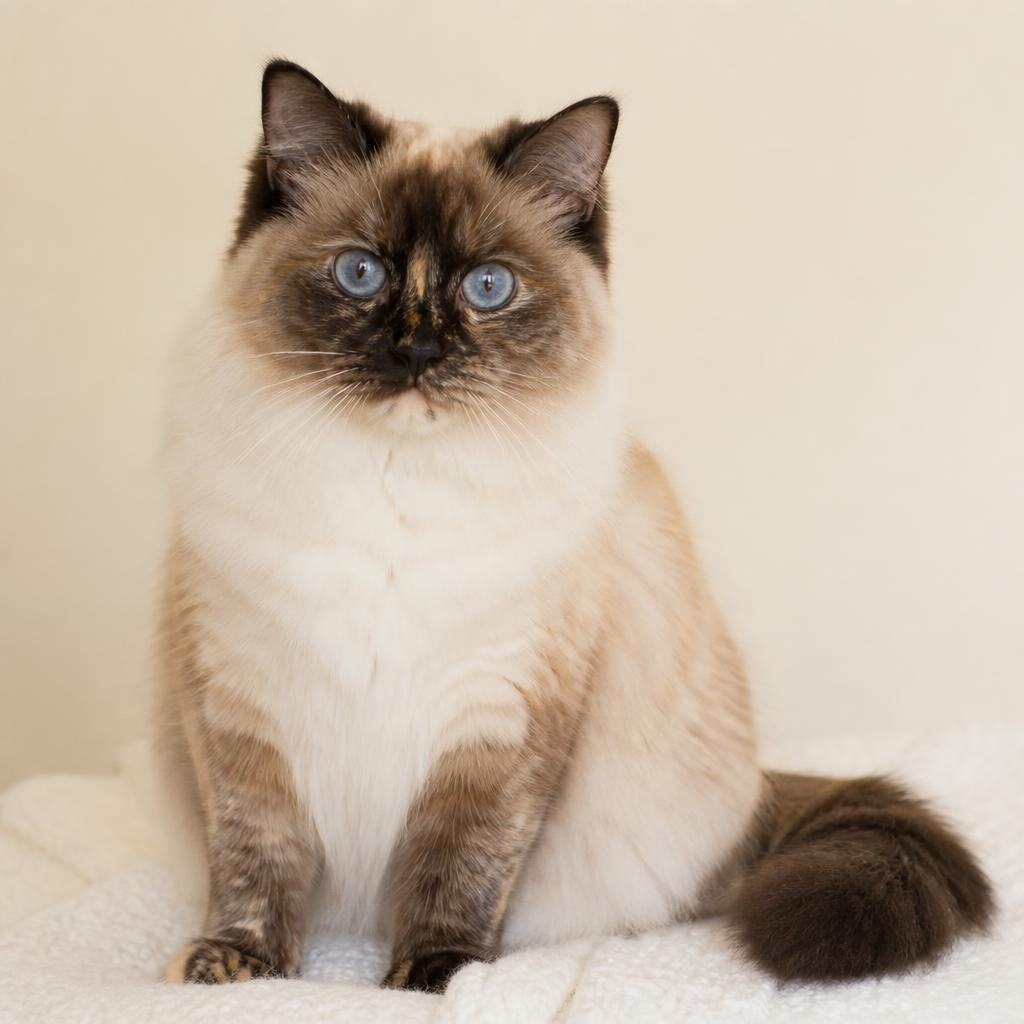
Seal points blended with warm reddish-orange tortoiseshell patches. A female-only pattern that mixes seal and flame tones.
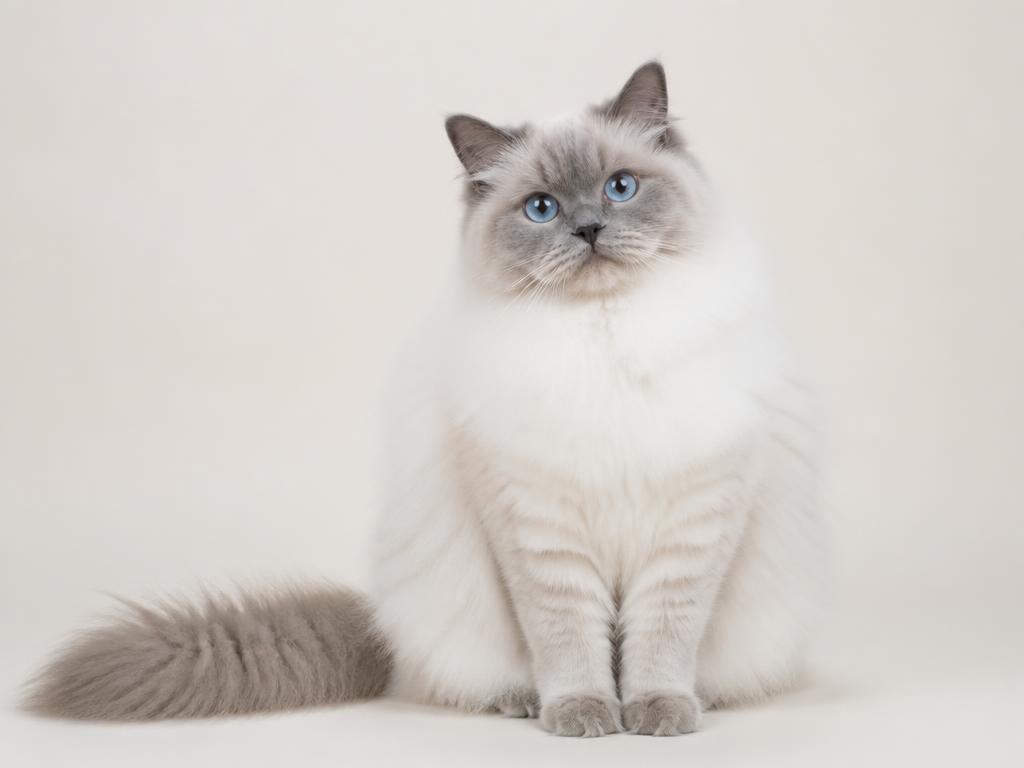
Cool gray-blue points on a lighter platinum body. A diluted version of seal that gives a soft, silvery look.
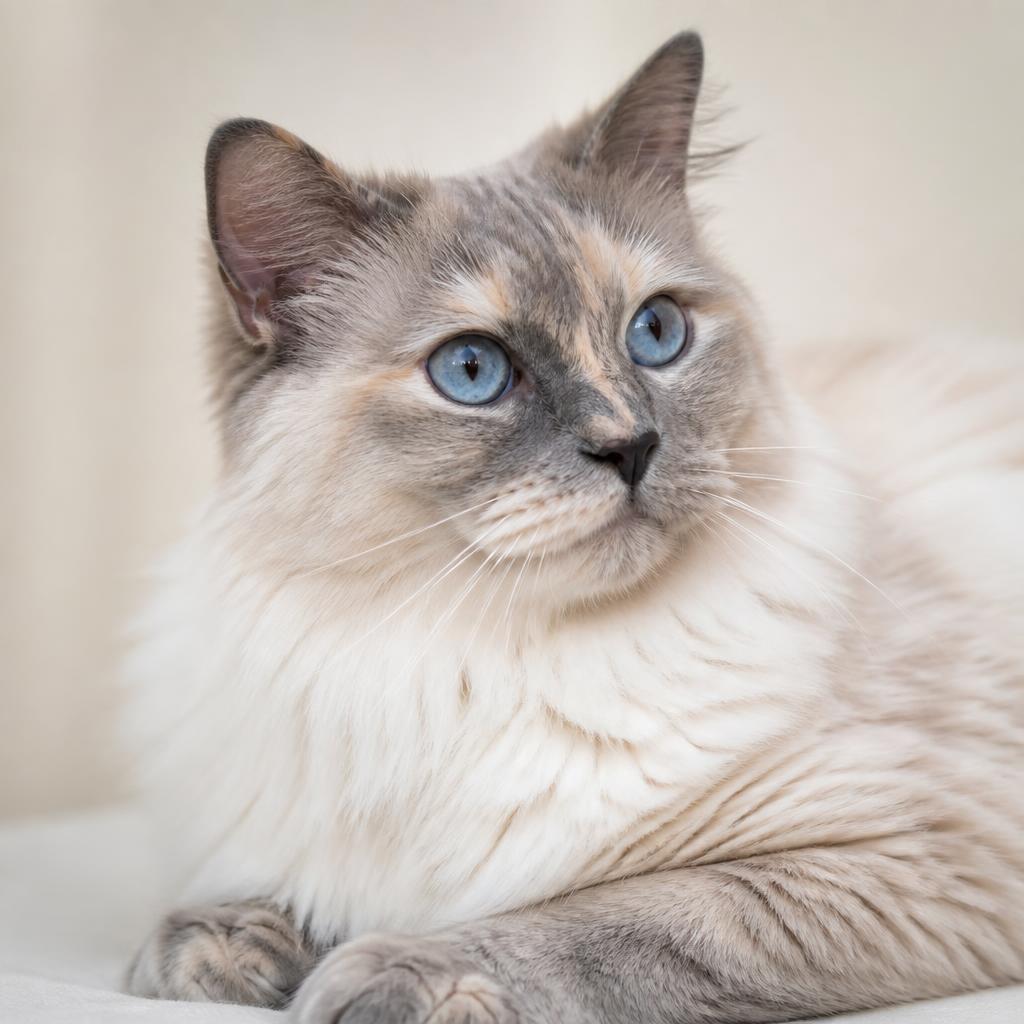
Gray-blue points mixed with soft cream tortoiseshell patches. The diluted version of seal tortie, seen only in females.
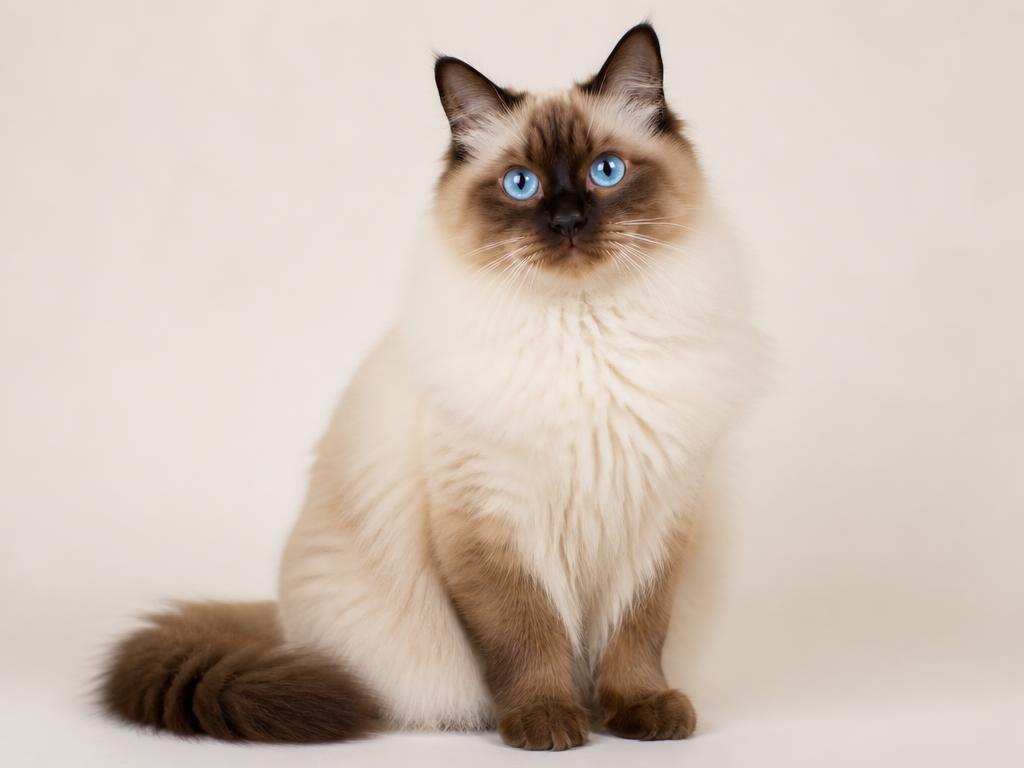
Warm milk-chocolate points on a creamy body. Lighter and richer than seal, with a distinctly warm tone.
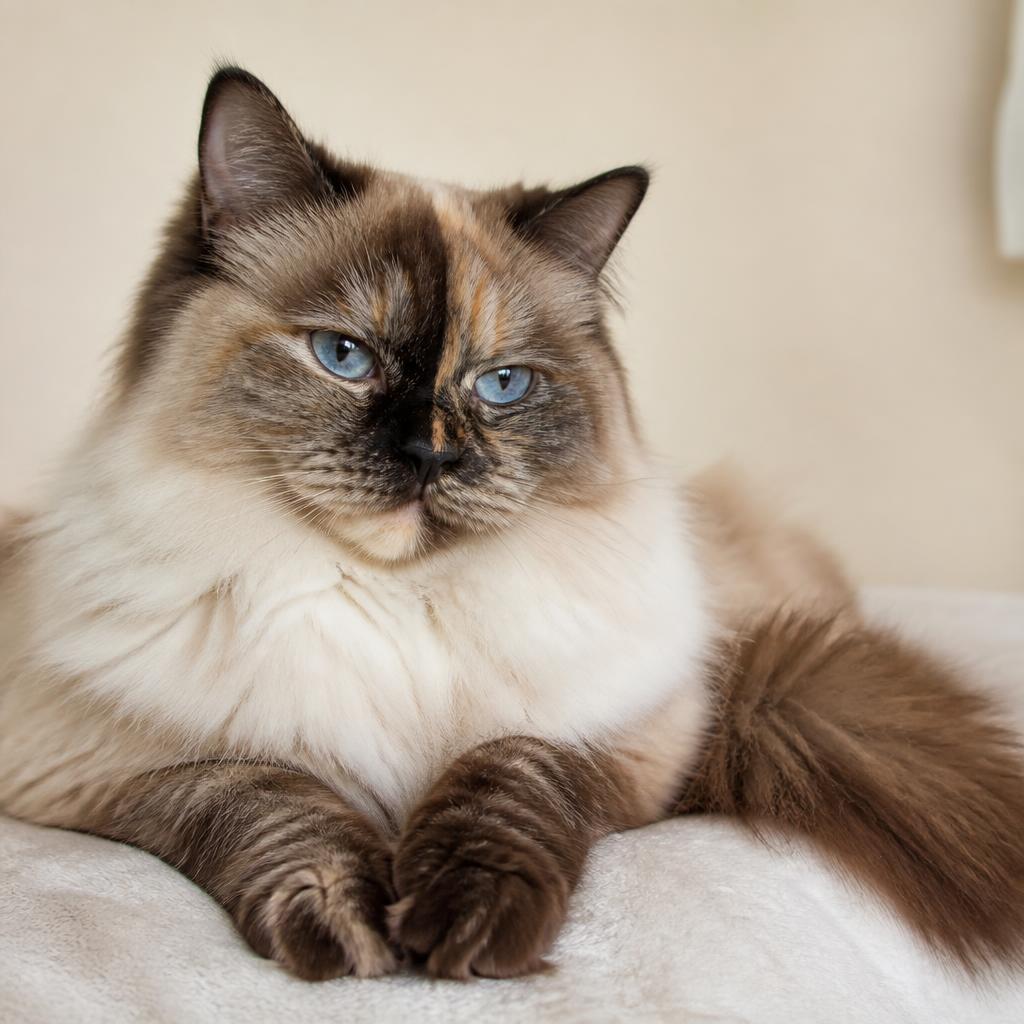
Chocolate points overlaid with reddish-orange tortoiseshell patches. A warm, patchy female color combination.
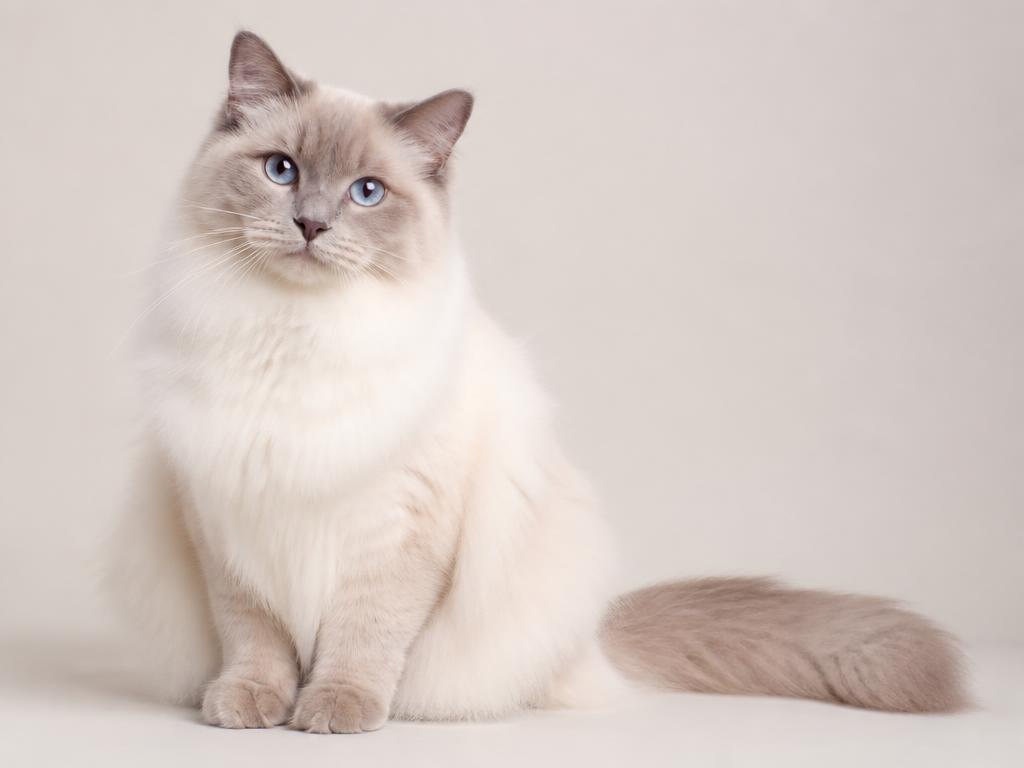
Pale frosty gray with a pinkish cast on an off-white body. The lightest diluted chocolate expression.
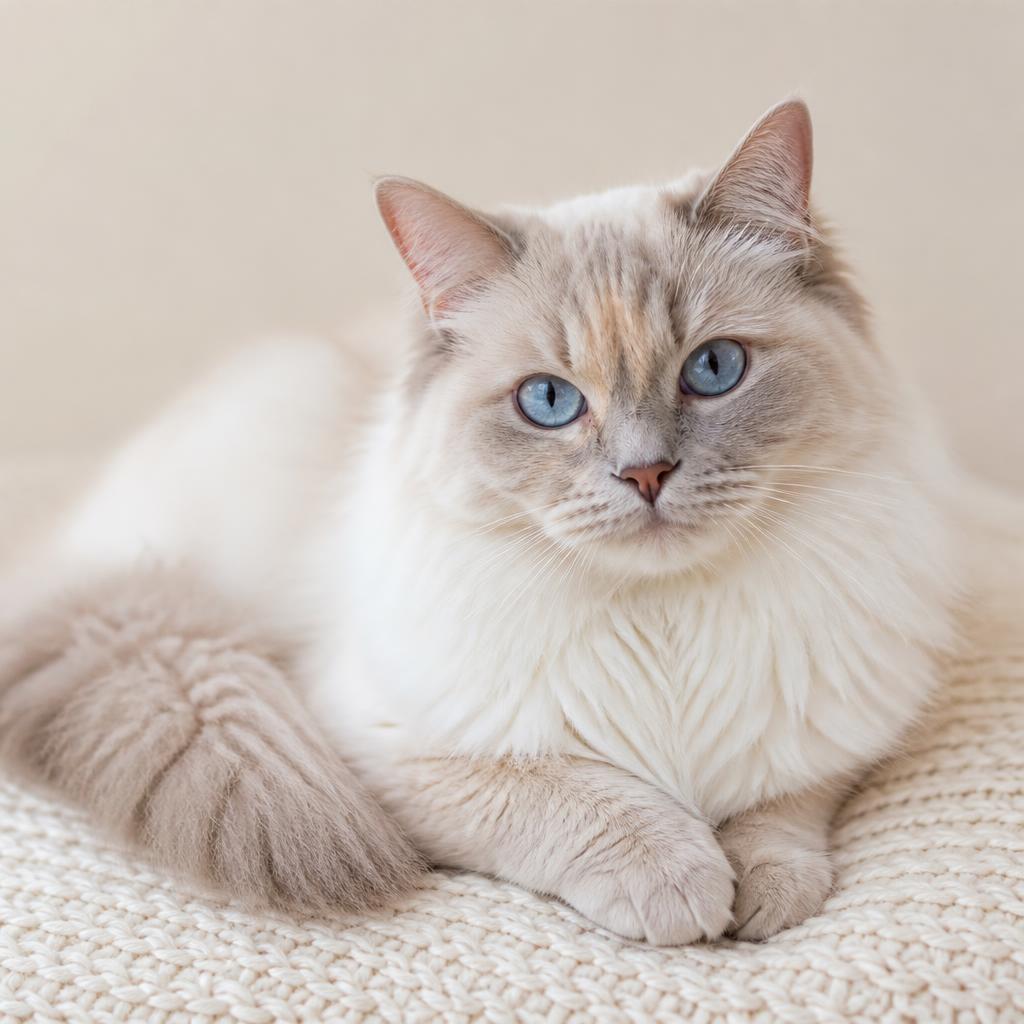
Pale lilac points blended with cream tortoiseshell patches. The lightest, most delicate tortie expression.
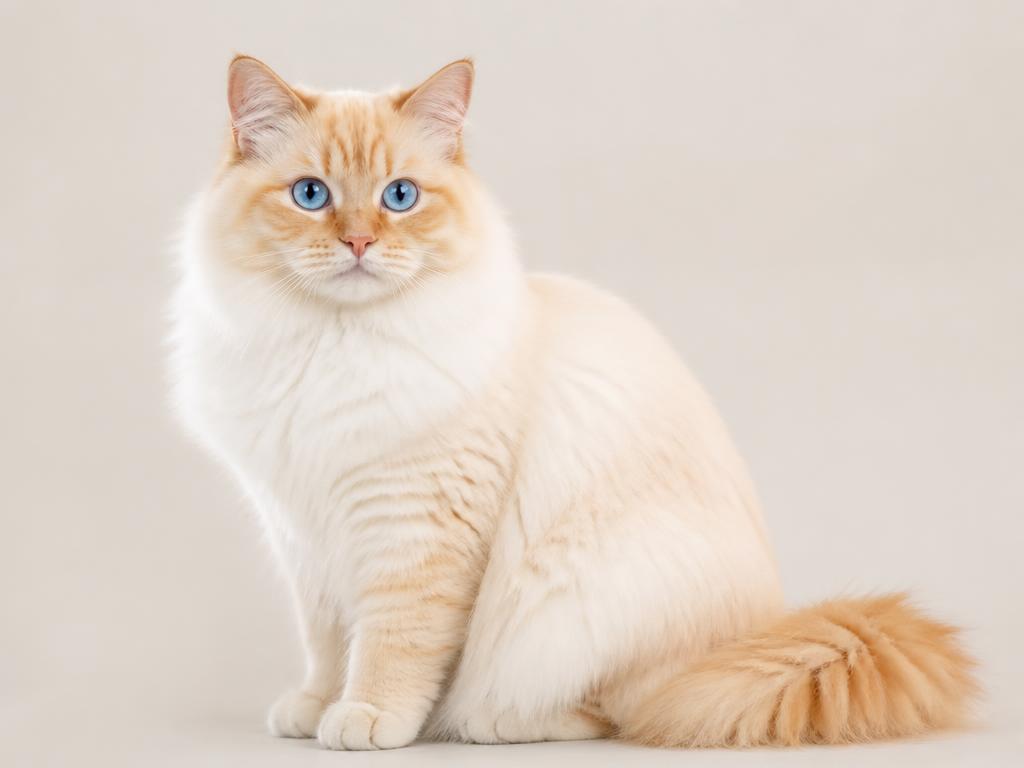
Warm orange-red points on a cream body. Males are most commonly seen as solid red/flame points.
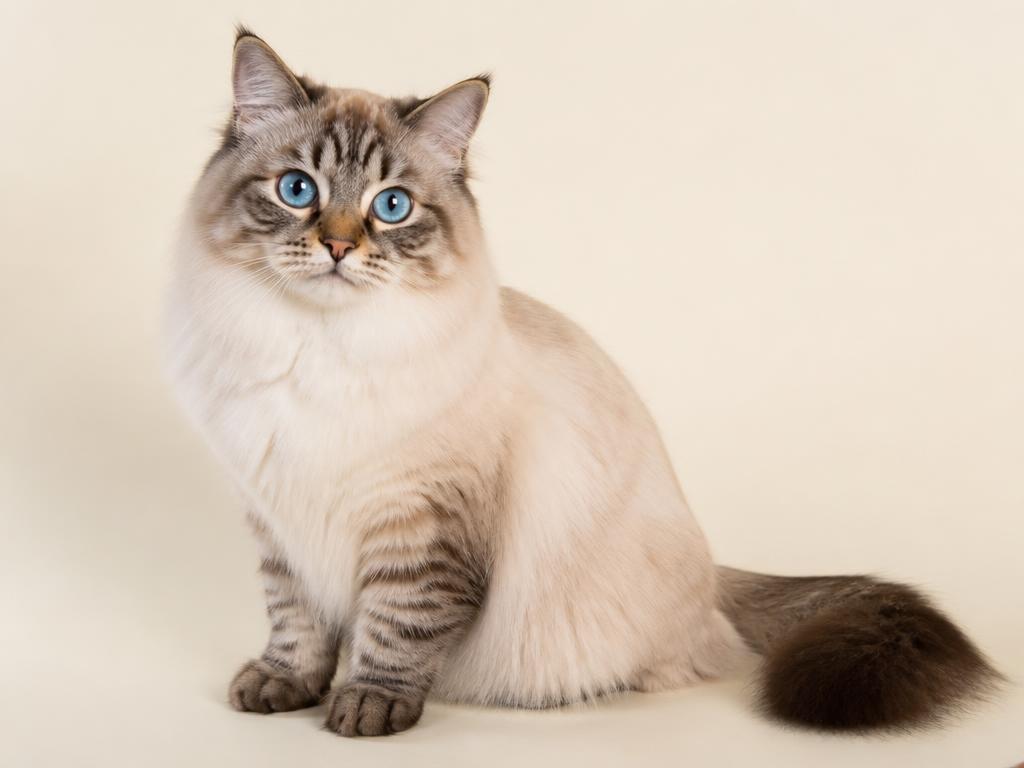
Seal points overlaid with tabby striping on the face and legs, often with a distinctive 'M' forehead mark.
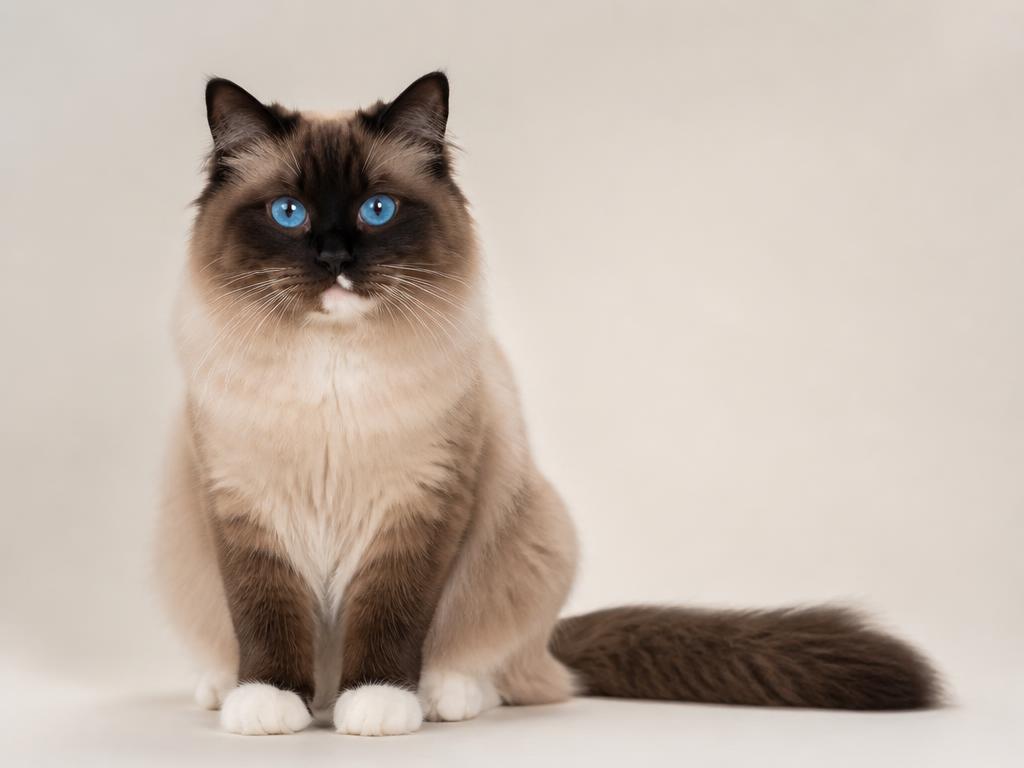
Seal points with white mittens on the front paws, white boots on the back legs, and a white chin stripe.
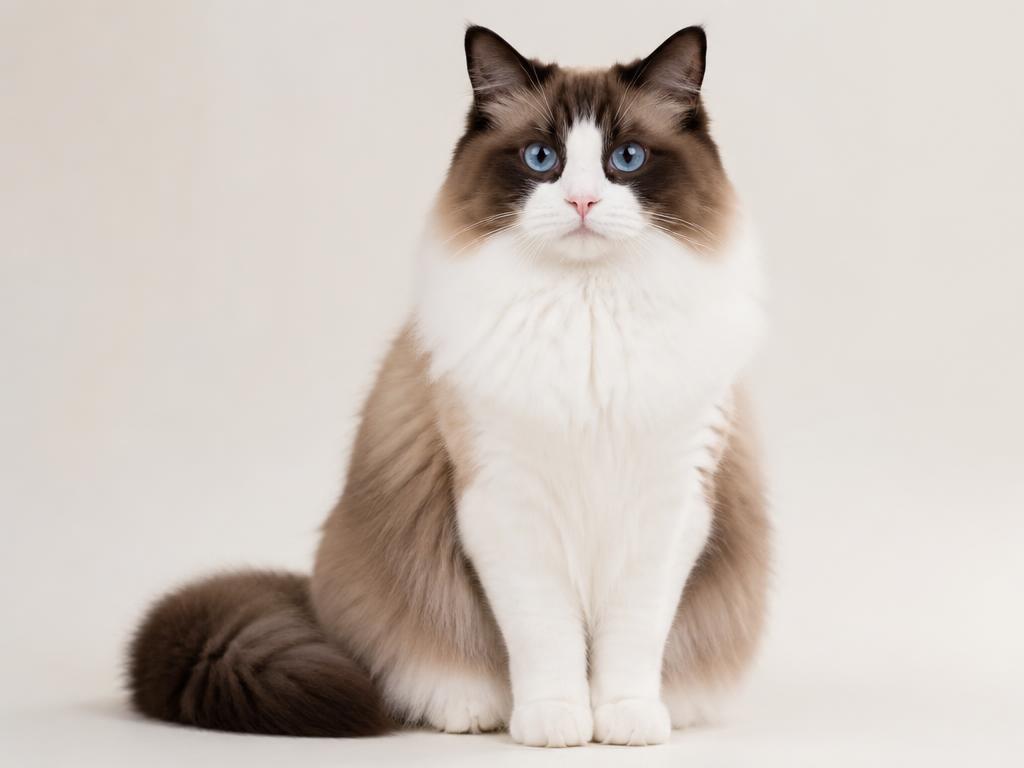
Seal points with an inverted white 'V' on the face, white legs, chest and underside, plus a white tail tip.
Lighting, age and season can change how a color looks in a photograph. Kittens darken as they mature, and summer coats can look paler than winter coats. For registration and breeding decisions, always confirm color with a judge, mentor or genetic test.